
Why Non-Magnetic Drill Collars Are Becoming Non-Negotiable for Directional Drilling Accuracy

Directional drilling depends on a chain of measurements that all have to be right, and one of the most consequential, and least visible from the surface, happens inside the drill collar section right above the bit. Get the magnetic environment around a measurement-while-drilling tool wrong, and the well can end up hundreds of feet off target before anyone notices.
The problem standard drill collars create
Conventional steel drill collars are magnetic. That’s fine for straightforward vertical drilling, where weight-on-bit and stiffness are the primary jobs a collar needs to do. It becomes a serious problem the moment MWD or LWD survey tools enter the bottom hole assembly, because those tools rely on magnetometers to determine wellbore azimuth relative to magnetic north, and a magnetic drill collar sitting near the sensor corrupts that reading.
The scale of the error isn’t trivial. Left uncorrected, magnetic interference from nearby steel can push azimuth readings off enough that lateral deviation reaches hundreds of feet over a long horizontal section, particularly in tightly spaced multi-well pad developments where staying inside a defined corridor matters as much as hitting the target itself.
How non-magnetic collars solve it
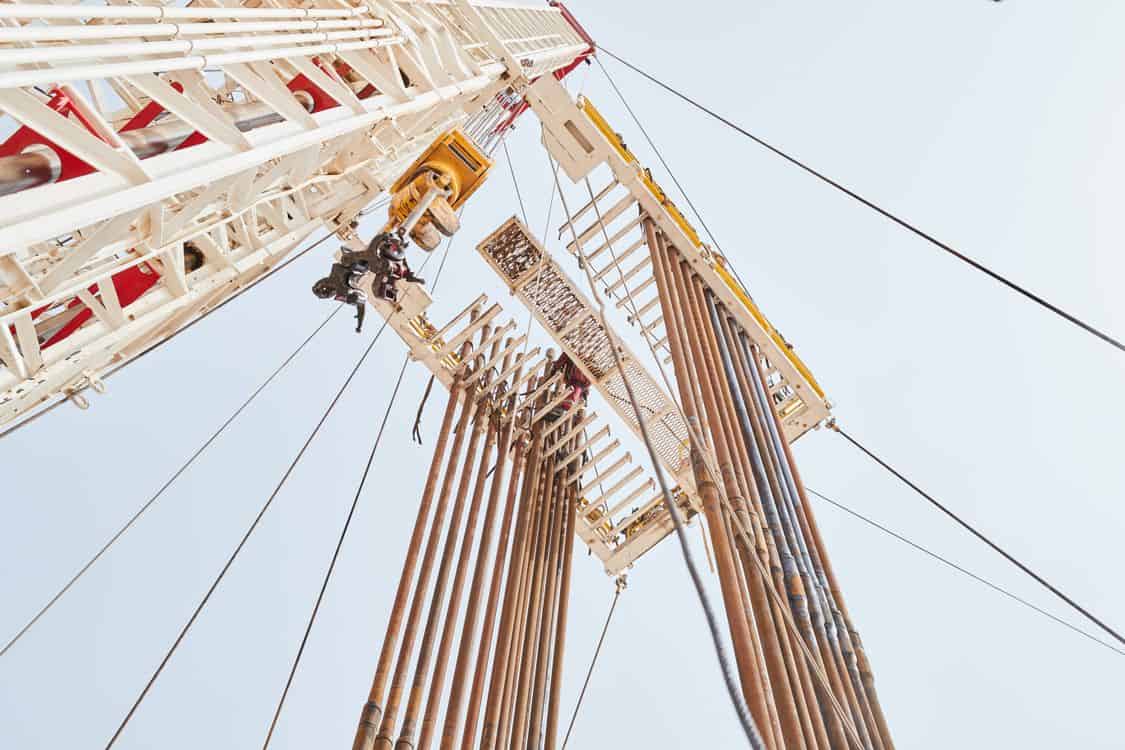
Non-magnetic drill collars address the problem at the material level, using specialized alloys, typically high-grade chrome-manganese stainless steel compositions, engineered to avoid the magnetic permeability that causes interference. Industry technical standards set the bar for what qualifies as genuinely non-magnetic: a magnetic permeability of 1.010 or less is the threshold a high-quality NMDC needs to hit before it’s considered reliable for MWD spacing.
When that threshold is met and enough non-magnetic collar length surrounds the survey tool, creating what’s sometimes called a magnetically silent environment, achievable survey accuracy improves dramatically, down to an error margin of less than 0.1 degrees on azimuth readings. That’s the difference between a directional program that can be trusted to place a wellbore precisely and one that needs expensive correction runs mid-well.
Where this matters most in practice
The stakes scale with how demanding the drilling program is. Standard vertical wells with minimal directional requirements can often tolerate shorter non-magnetic spacing without meaningful accuracy loss. Highly deviated wells, extended-reach laterals, and especially multi-well pad developments, where wellbores need to stay within tight spacing corridors relative to each other, are where non-magnetic collar specification stops being a nice-to-have and becomes close to mandatory.
Slick and spiral collar geometry decisions layer on top of the magnetic question rather than replacing it. Spiral designs reduce wall contact area, lowering differential sticking risk in higher-angle sections, a real concern in the same extended-lateral wells where MWD accuracy matters most, since those are often the wells drilling through formations with the highest differential sticking exposure to begin with.
Quality control around non-magnetic collars tends to be stricter than for standard collars, and for good reason: a batch that doesn’t actually meet the permeability specification defeats the entire purpose of installing them. Operators increasingly expect a documented verification chain, material certificates, heat treatment records, and magnetic interference testing, not just a collar stamped “non-magnetic” on the manufacturer’s word.
As directional and extended-lateral drilling makes up a larger share of total wells drilled, the margin for magnetic interference error keeps shrinking relative to what operators are willing to accept. A collar spec that used to be reserved for the most demanding directional programs is increasingly becoming the baseline expectation for any well where azimuth accuracy actually matters, which in the current drilling environment is most of them.
The shift toward multi-well pad development, now standard practice across most major unconventional plays, has made magnetic interference a shared risk rather than a single-well concern. When several wellbores are drilled from the same surface location with tight lateral spacing between them, an azimuth error in one well doesn’t just miss its own target zone; it raises real collision risk with adjacent wellbores planned assuming each would track within a narrow tolerance.
That collision-avoidance requirement has pushed some operators to specify longer non-magnetic collar sections than the historical minimum, treating the extra length as cheap insurance against a survey error that could force an expensive relief-well intervention or, worst case, an actual collision. The cost difference between adequate and generous non-magnetic spacing is small next to the cost of a pad-development incident better collar specification would have prevented.
Manufacturers working in this space are pushing permeability specifications tighter still, with some premium alloys now targeting permeability meaningfully below the 1.010 threshold that defines the baseline quality bar. That improvement matters most in the highest-value applications: geothermal wells drilling through unusually magnetic formations, or ultra-extended-reach wells where cumulative azimuth error over tens of thousands of feet of lateral becomes significant even at industry-standard accuracy.
For operators evaluating collar suppliers, the practical checklist has gotten more rigorous than a few years ago: verified permeability testing on actual production batches, not just the alloy spec sheet; documented heat treatment and material certification; a track record of survey accuracy on comparable well designs. As directional programs keep pushing lateral lengths and pad density further, that verification is what separates a collar spec that reliably delivers sub-0.1-degree accuracy from one that only does so on paper.
Rental fleet economics have shifted alongside the technical requirements. Non-magnetic collars cost meaningfully more to manufacture than standard steel collars, and operators used to treat them as a specialty item reserved for the wells that clearly needed them. As more of the active well count runs through directional and extended-lateral programs, some drilling contractors have found it simpler to stock non-magnetic collars as the default across a larger share of their fleet rather than swap collar strings between well types, even though it means carrying more expensive inventory on wells that might have tolerated standard collars just fine.