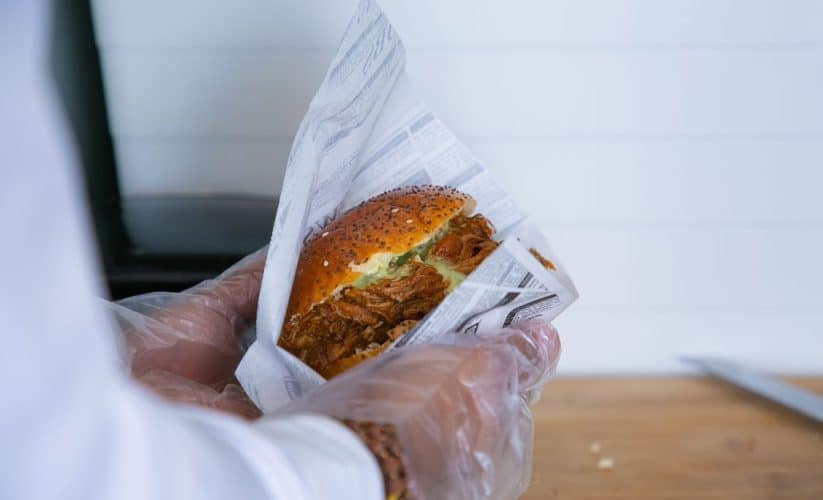
Australia’s PFAS ban puts food wrap materials under the microscope

From July 1, 2025, Australia’s Industrial Chemicals Environmental Management Standard began prohibiting the manufacture, import and use of three PFAS compounds — PFOA, PFOS and PFHxS. These are chemicals long used in grease-resistant coatings for food contact papers. The change was classified under Schedule 7, reserved for substances judged likely to cause serious or irreversible environmental harm with no essential use case remaining.
For decades, “forever chemicals” were the easy shortcut for making paper resist oil and moisture without a plastic laminate. That shortcut is closed now, at least for the compounds named in the standard, and food businesses that package burgers, chips and pastries are having to check exactly what their wrap is treated with.
Why grease resistance suddenly became a compliance question
Most cafes and takeaway operators never thought about the chemistry behind their wrapping paper. It resisted oil, it held its shape, and that was the end of it. The PFAS rule change forced a second look, because a permitted trace threshold now applies to unintentional contamination in three PFAS chemicals, with that figure due for review in mid-2027.
Suppliers who can document their fibre and coating sources have an easier conversation with cafe owners than those who can’t. Businesses sourcing printed greaseproof paper for burger wraps or chip trays are asking suppliers for a straight answer on what the grease barrier is actually made from, rather than assuming it’s fine because it always has been.
The scrutiny isn’t limited to the big fast-food chains with compliance teams on staff. Independent bakeries, fish and chip shops, and market stalls running on tight margins are the ones least equipped to chase down a technical data sheet from an overseas manufacturer. That’s why local supplier relationships matter more than they did a year ago.
It also changes how a wrap gets sold in the first place. A rep who can walk into a cafe with a certificate of composition, rather than a verbal assurance, closes the conversation faster and answers the question before the owner has to think to ask it.
What the trace-level exemption actually allows

The standard doesn’t demand a zero-PFAS world overnight. It allows unintentional trace contamination at prescribed levels, and it carves out exemptions for research use, laboratory contexts and goods already in commercial service before the ban took effect.
That nuance matters for packaging buyers. The rule isn’t a blunt instrument banning every food wrap on the shelf; it targets deliberate use of the three named compounds in manufacturing, not accidental low-level presence a supplier couldn’t reasonably eliminate through normal production controls.
Even so, the burden of proof has shifted. A supplier that used to say “trust us” now needs paperwork to back that up, and buyers who never asked for documentation before are starting to request it as a matter of course.
Reading the fine print before the 2027 review
The scheduled review of the trace threshold gives the industry roughly eighteen months to adjust before regulators look again at whether the current level is tight enough. Packaging buyers who wait until the review lands to ask questions will be starting from behind everyone who acted early.
A more useful approach treats the current rule as a floor rather than a ceiling — asking suppliers now for documentation on grease-resistant treatments, not just when an inspector asks. Food businesses that get ahead of it avoid a scramble the next time the schedule tightens.
The change is a reminder that packaging most people never examine closely, the sheet under a burger, sits inside a chemical management standard that moves on a government timetable, not a marketing one. That timetable is only getting stricter from here.